|
Figured Bass
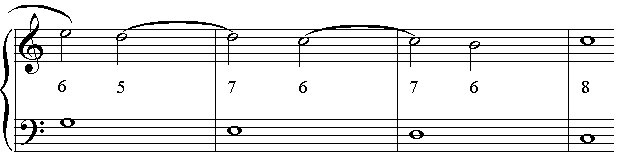
Figured bass was originally a way of clarifying the harmony for continuo keyboard players who only had a bass line to read from. The numbers, written below the stave, show the interval(s) above the bass of enough notes from the chord for the keyboard player to know unequivocally which harmony is meant. They are used in Schenkerian analysis to clarify the harmony if necessary in the absence of inner parts.
Numbers between the staves as in the example below mean something slightly different. They clarify the succession of intervals between the outer two voices. They are only used on a Schenkerian analysis to draw attention to these interval successions if they are particularly significant
|